How to map your foodservice total addressable market (TAM)


Most foodservice manufacturers engage just 5-10% of the operators who could buy their products. The rest of the market goes untouched.
Not due to lack of effort. Because manufacturers can't see it.
After talking with more than 500 food and beverage manufacturers, First Bite has heard the same thing again and again: foodservice suppliers don't know who their buyers are.
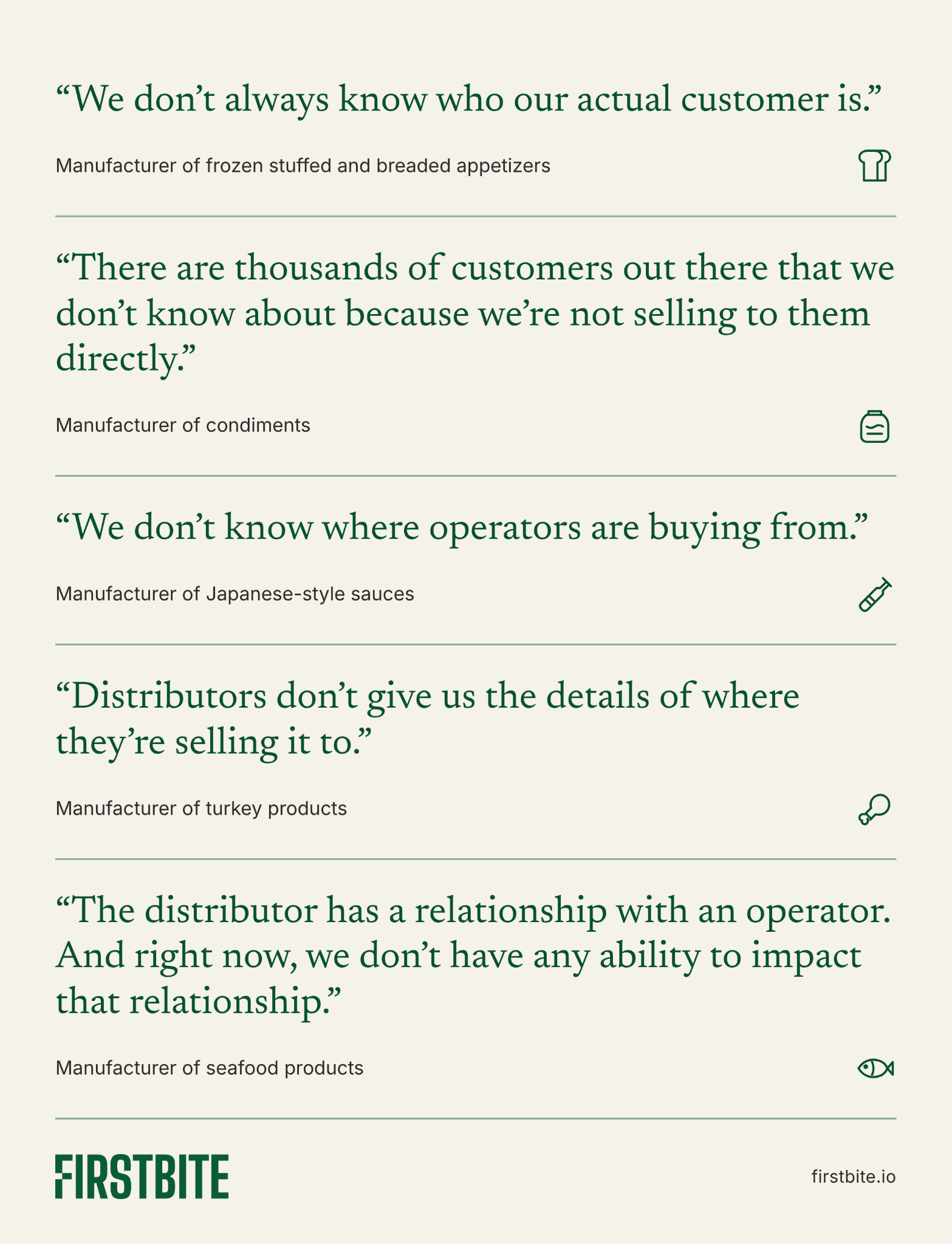
Why foodservice manufacturers can't see their total addressable market
Manufacturers sell through intermediaries, with few direct operator relationships and almost no feedback loops. That makes engaging directly with the 700k+ independent and regional operators in the U.S. feel nearly impossible.
Most foodservice sales leaders face the same set of constraints that keep their market reach low:
- Lack of direct relationships. Operators buy products through distributors and often never engage with the brand directly. Manufacturers may also use brokers that end up maintaining the relationships.
- Lack of data and scalable methods. Mapping the full market and finding right-fit opportunities has historically been full of holes. There are tons of data sources for the top 500 chains, but very little information on independents and small chains scattered across Google and LinkedIn.
- Reliance on the same few tactics. Teams debate broker models versus a direct sales force, how many field reps to add, whether to use promotions, and if inside sales is worth the manual work.
- Low belief in alternatives. Few teams see a realistic path to reaching operators beyond those traditional channels.
How to map your foodservice whitespace
This is the problem First Bite is obsessed with solving… Providing accurate data on every potential foodservice operator and a way to narrow the universe to addressable targets. Then offering tools to overlay existing data and conduct scalable, quality outreach.
Here’s a breakdown of how to map your total addressable market and stop accepting 5-10% market reach as the only possible outcome.
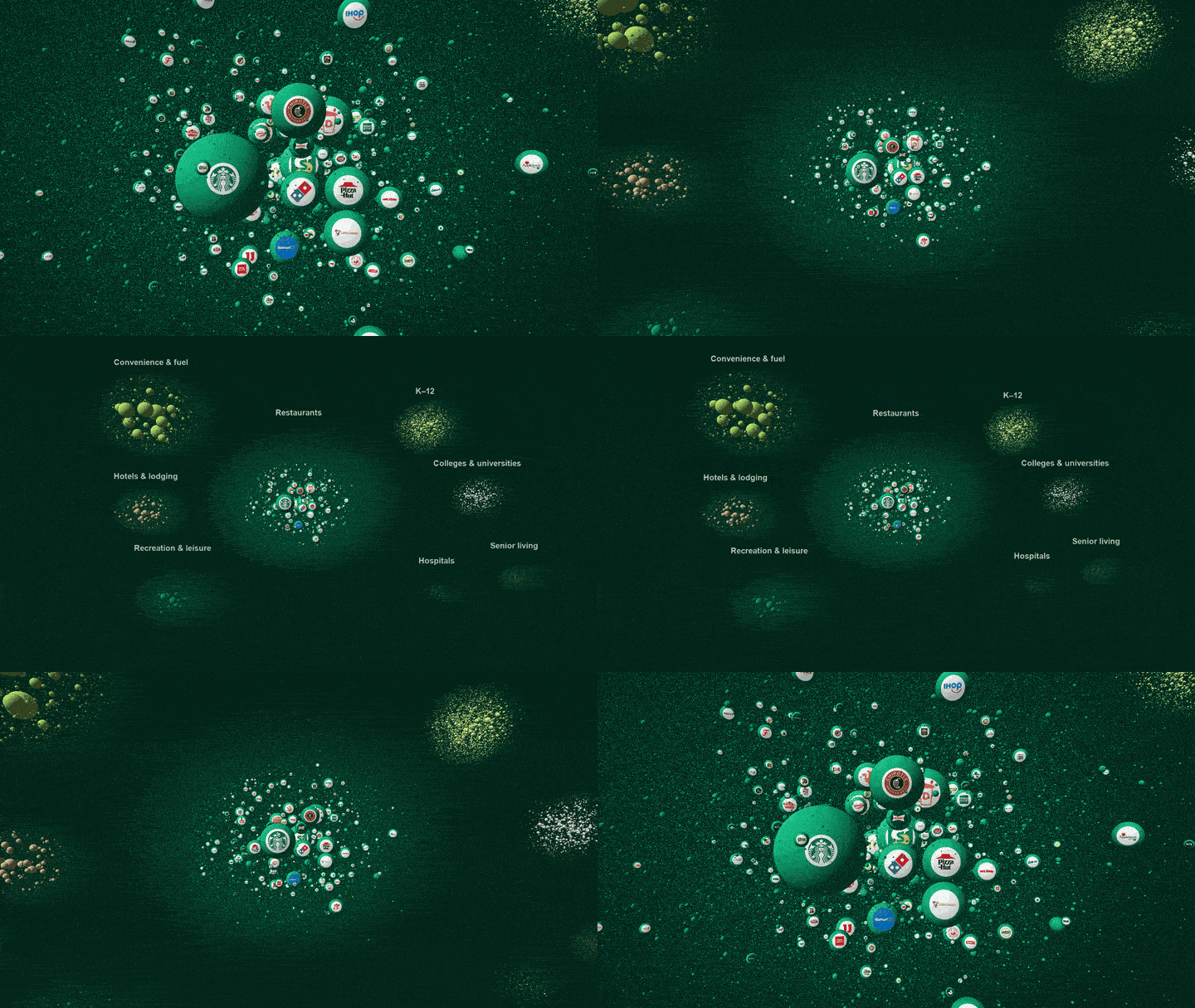
1. Start with the whole market
Begin with every commercial and non-commercial foodservice operator in the U.S. First Bite’s operator dataset covers more than 1.5 million doors, with menu, traffic and location details for each. It’s updated monthly to ensure accuracy as locations open/close and culinary decision makers change roles.
2. Filter by channel
Next, narrow the universe to the channels where your product can be sold. That could be restaurants, colleges, hospitals, hotels, leisure venues or any mix of them. In First Bite, you can select the commercial and non-commercial channels that fit, and everything else drops out.
3. Find the operators your product fits
Refine further by cuisine type and menu items. Because First Bite tracks what’s on each operator’s menu, you can find the operators already serving dishes that use your product (or a competitor) and menus where it would be a natural fit. This step turns a generic market map into a list of operators with a clear reason to buy from you.
4. Layer in distribution
Add where you have active distribution. What’s left is the set of operators you can realistically sell to today, which is your serviceable market. This also shows you where distribution gaps might be holding you back.
5. Map your current coverage
Now bring in your own business data. First Bite matches each record to our operator dataset, so you can see who you’re already reaching:
- CRM records: operators already in your system
- Sales conversations: operators your team has actually talked to
- Brokers: accounts covered in broker activity reports
- Trade shows: leads from events
- Sampling: every operator that has received a sample
- GPO purchase data: active and lapsed operators buying through group purchasing organizations
6. See how much is still open
Compare your coverage against your addressable market. The operators you haven’t reached yet are your whitespace. Most manufacturers find they’re reaching only 5–10% of their market.
What to do with your operator whitespace
A 5% coverage number can be hard to look at, but it's also the most useful number a sales leader can have. It shows how much growth is available without new products or new distribution, and exactly where it sits.
The map also makes the next step practical. Because every open operator is already tagged by channel, cuisine, menu items, unit count and distribution, you can break the gap into narrow audiences of a few hundred operators each.
The next step is to run quality, measurable, and scalable (QMS) campaigns As you engage more operators directly, the covered share of your TAM grows, and you can see which audiences are still open.
Learn how to run QMS sales motions here.
See your products mapped against the foodservice universe
First Bite helps our platform users map their products against every foodservice operator in the U.S., layer in current coverage and execute strategies to close the gaps.
Book a time with our team to see your TAM and discuss how to start closing the whitespace.
—
Frequently asked questions
What is a total addressable market in foodservice?
Your total addressable market (TAM) is every foodservice operator that could realistically buy your products. It's defined by channel, cuisine, menu items and distribution, not by the full list of operators in the U.S.
How do you calculate foodservice TAM?
We start with data on every commercial and non-commercial operator. Then we filter by the channels your product sells into, by cuisine and menu items, and finally where you have distribution.
How much of their market do foodservice manufacturers typically reach?
On average, manufacturers engage just 5-10% of their opportunity base. Even well-resourced programs with national distribution can have large coverage gaps.
What data should you use to measure market coverage?
Combine your CRM records, sales conversations, broker and trade show activity, sampling history and GPO purchase data, then compare that against your TAM.
How many independent restaurants and regional operators are there in the U.S.?
There are roughly 700,000 independent and regional foodservice operators in the U.S., and they are the hardest to engage directly due to limited visibility through distributor sales.
Read more

Want foodservice sales success? Learn to think like a restaurant operator

Why you need a CRM that’s purpose-built for foodservice

Making sense of the broker side of the business: A conversation with Julie Swift
Start closing better foodservice deals today
