How to turn menu trends into foodservice sales opportunities



Every food and beverage brand has, at some point, opened a trend report.
Plant-based meal options are growing in healthcare. International flavors are driving QSR sales. Functional beverages are gaining popularity across all foodservice channels.
That information is valuable. It helps shape product strategy, sharpens messaging, informs innovation, and gives leadership confidence that they're investing in the right categories.
But on Monday morning, none of those insights answer the question your sales team is asking:
Who should I call?
Most food organizations start by investing in tools that deliver insight. The next step is having a way to turn those insights into qualified accounts, relevant decision-makers, and outreach that fuels pipeline.
What Menu Trend Data Delivers
Market research firms and platforms like Tastewise and Datassential are exceptionally good at what they're designed to do. They help brands understand:
- Which menu items are gaining or losing share
- Emerging and dropping consumer preferences
- Category performance over time
- Macro shifts across major restaurant chains and foodservice segments
That type of intelligence influences portfolio planning, innovation roadmaps, marketing campaigns, and executive decision-making.
What it doesn't do is tell a sales rep exactly which operators match the trend, who the right decision-maker is, or how to tailor outreach to that operator.
Restaurant menu data needs an execution layer that turns market insights into sales opportunities.
Using Operator Data to Act on Menu Trends
Understanding what's happening on menus is only the first step. You then need to identify exactly which operators are right-fit for a particular trend and your product, then reach the foodservice decision makers with relevant messaging.
This is what First Bite was built to deliver. Here's what that process looks like:
Step 1: Translate menu trends into prospect filters.
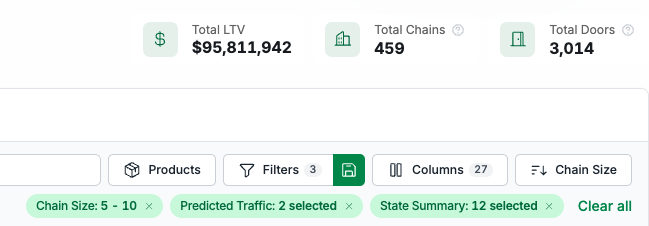
Translate the trend into who it is most relevant to. Use First Bite filtering tools to identify restaurants based on menu items, channel, cuisine type, region, social media presence, or any equipment it depends on.
For example, if you're a supplier of coconut curry and harissa sauces with distribution across the Midwest looking to capitalize on the growing demand for global flavors in QSR, you might use filters to find:
- High-traffic restaurants with Midwest locations that serve bowls, wraps, or rice-based dishes where your sauces naturally fit
- Operators with 5-15 units that update menus regularly
- Regional chains with similar brands or ingredients listed on menu that indicate easy incorporation of new sauces or use of a scratch kitchen
Rather than pursuing every QSR restaurant, use a restaurant database to build highly targeted prospect lists based on where your product is the best fit. That allows you to prioritize the accounts most likely to convert.
Step 2: Break out operators based on trend adoption.
To make your outreach as effective as possible, further break down your target audience based on their potential reception to the trend. Each group requires different messaging and presents different sales opportunities.
Trend forward — Operators already moving in the direction of the trend with existing items on their menus. This signals interest. They've proven the demand exists and you're offering a better or additional version of something they’re already bought into.
Trend lagging — Operators who haven’t moved on the trend yet, or have little to no related products on their menus. This signals opportunity. They match the ICP (segment, size, region, equipment) but haven't taken action. These may need more education, but represent real foodservice whitespace with large sales potential.
Spotting this split takes ongoing restaurant menu tracking, not a one-time trend report — First Bite's operator data updates continuously so trend-forward and trend-lagging lists stay current as menus change.
Step 3: Access verified foodservice decision makers.
Each account on your target lists needs a named contact with actual purchasing authority: a foodservice director, culinary innovation lead, restaurant owner, or purchasing manager.
First Bite's verified foodservice decision maker data attaches contacts directly to each operator on your list, so there's no additional research needed between building the list and reaching out.
Step 4: Launch personalized outreach.
A generic email rarely performs. Open your outreach with mention of the specific trend, the specific thing you noticed about their operation, and how your product specifically helps. Make it read like it was actually written for them.
Example message #1 - trend forward: I noticed your team at [hospital name] has expanded plant-forward menu offerings over the past year. We've been helping healthcare systems add high-protein plant-based entrees that work within existing kitchen operations. Can I send over samples of items that have performed well with similar hospitals?

Example message #2 - trend lagging: Did you know cold coffee is trending towards 75% of all coffee consumption? I noticed [cafe name] only has 2 cold coffee offerings on the menu right now. We’re a cold brew coffee brand available through [distributor name] that offers a pre-made solution. Can I send you a sample and menu ideas?
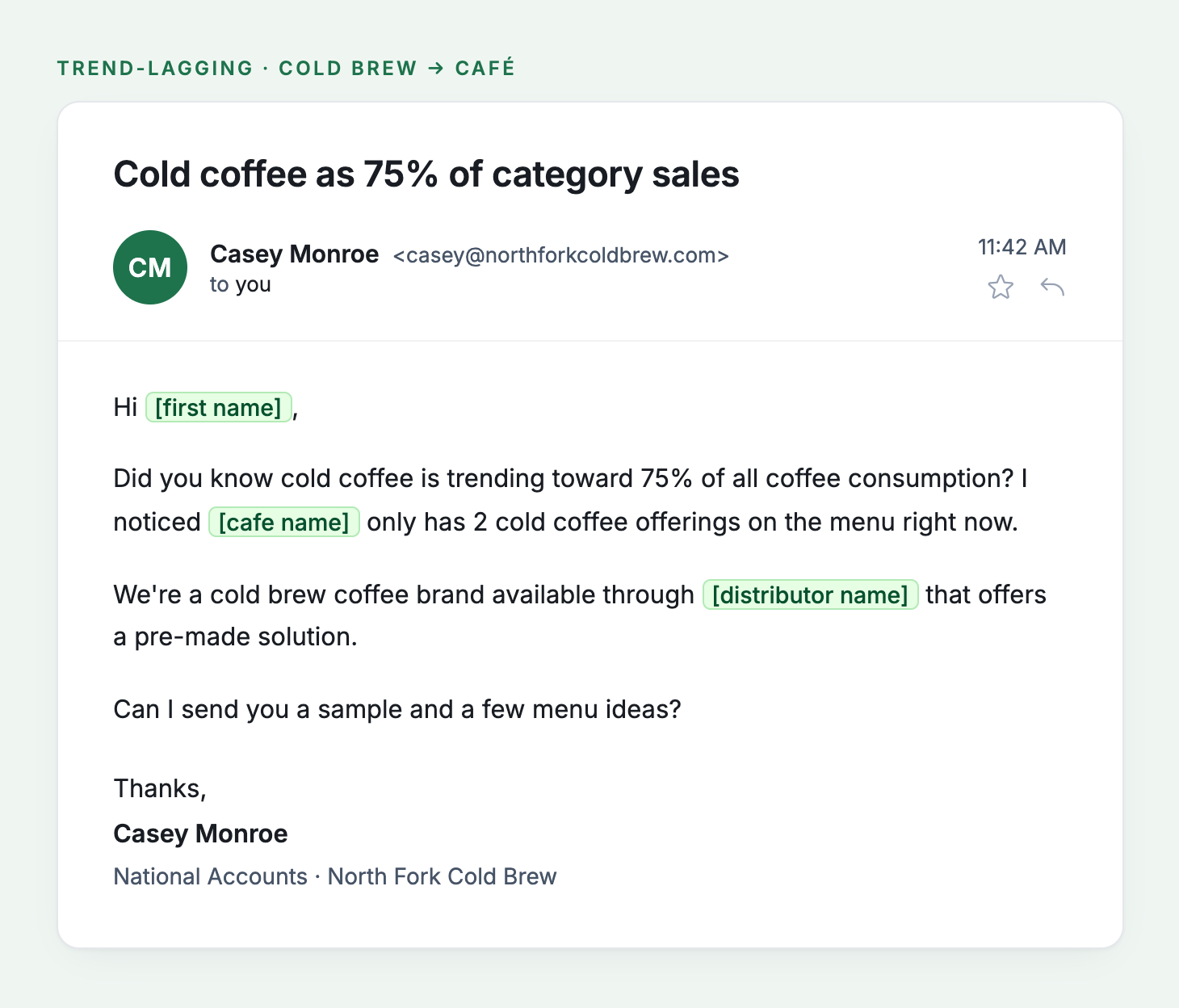
Since you’ve built multiple target lists that are based on specific qualifiers, your messaging can be highly relevant.
Run an automated email sequence, which might look like:
- Email 1: Reference the trend and how your product fits.
- Email 2: Share an operator success story or customer testimonial.
- Email 3: Offer a rebate — a low-risk way for an operator to try your product without committing to a full menu change.
- Email 4: Send a short check-in asking whether the initiative is currently a priority.
And don’t launch all your campaigns at once! Test what resonates then expand.
Example: Menu Trend Campaign with 13% Reply Rate

One First Bite customer, a manufacturer of baking products, wanted to capitalize on the growing popularity of global flavors and rising demand for gluten-free options. Rather than sending a broad campaign to every restaurant in their distribution regions, they used operator data to identify where those trends were already appearing on menus.
First, they filtered operators serving Brazilian cheesy bread (pão de queijo), a menu item that aligned closely with their product portfolio and the noted trends. From there, they segmented operators into three distinct audiences based on menu composition and business characteristics, allowing each campaign to speak directly to the recipient's operation.
Instead of generic messaging about the rise in global flavors, each email referenced the specific menu item the operator already served and explained how the manufacturer's products could help expand offerings or improve consistency.
The result was a 13% interested reply rate—six times higher than the average cold email response rate of 2%.
Menu Trends Don't Build Pipeline. Operator Data Does.
Menu trends only become sales opportunities when they're paired with operator identification, buyer contacts, and relevant outreach.
Request a demo and learn how First Bite gives you the tools and restaurant menu data to operationalize trend knowledge by identifying the right operators, decision-makers, and outreach approach.
Read more

Template: Improve your next foodservice cold email sequence

Best practices for trade show lead capture and follow-up

Why you need a CRM that’s purpose-built for foodservice
Start closing better foodservice deals today
